 Session 1: Today we’ll be listening to an episode of the podcast series Radio Lab titled Shorts: Proof. While listening, pay particular attention to the audio that has been meticulously produced for this episode. Not only is the storytelling superb, but also the sound design is of outstanding standards. Be prepared to discuss specific examples from the audio after listening to the episode. While listening please answer the questions listed below for discussion after the exercise has been completed. This in-class exercise will apply to your participation grade.
1. Describe a minimum of three incidental sound effects used in the episode. Are the incidental sounds typical of radio productions?
2. Describe a minimum of three ambient sound effects used for backgrounds. How are these sounds used to illustrate the environments?
3. Describe one way that the dialogue has been processed. How does the processing impact story?
4. How do music and other non-diegetic sounds play a role in the piece?
5. How would you characterize the overall quality of the sounds effects, dialogue, and production? How much effort do you imagine was put into the audio for the episode?
Multitrack Project Milestone #1
Due: Week 6, Session 1
1. Be prepared to discuss your Multitrack project plan
2. Start by detailing the concept of your project
3. Outline examples of the sounds you plan to record
4. Specify examples of incidental sounds, ambient sounds, non-diegetic sounds, and dialog
5. List examples of the processing you plan to apply
Also, please share your ideas for your Multitrack Production Project. Are you planning a podcast or radio documentary? Or, does your project tell a story? Perhaps you’re more interested in experimenting with soundscapes and processing to create an atmosphere or environment. The most important thing is that your tracks work well together. Today I would like to hear from you on what you have in mind. Also, let me know if you’d like to get some feedback on anything you have produced so far for the Signal Processing Exercise or Field Recording Library.
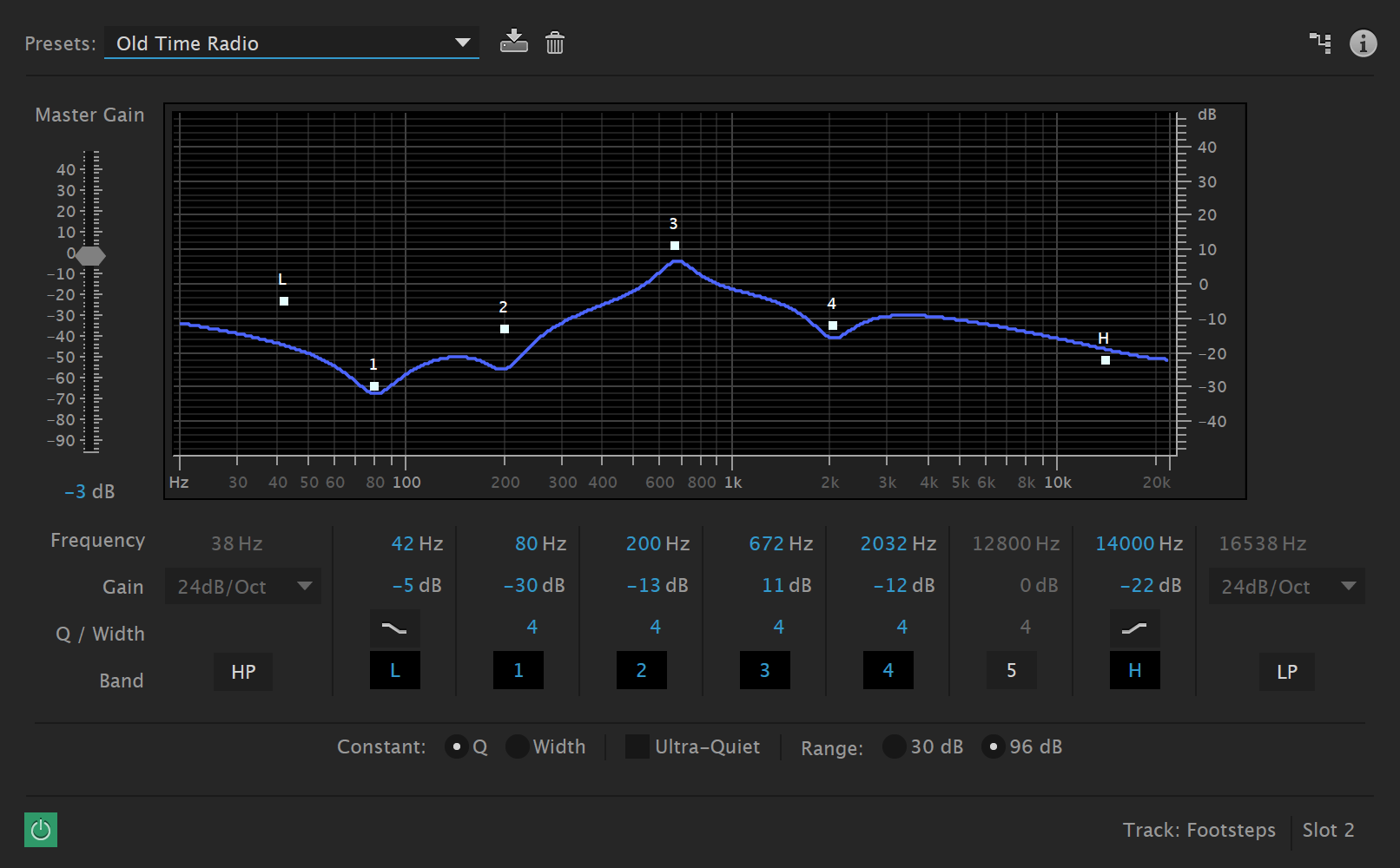
Finally let’s take a good look at Equalization. Equalization, or EQ, is critical when mixing multiple tracks of audio together. Layering sounds with similar frequencies can often cause a “muddy” mix unless each track is tailored with EQ to work well together. The following article has an excellent explanation of a few different types of eq filtering.
Relevant Resources:
http://en.wikipedia.org/wiki/Equalization_filter
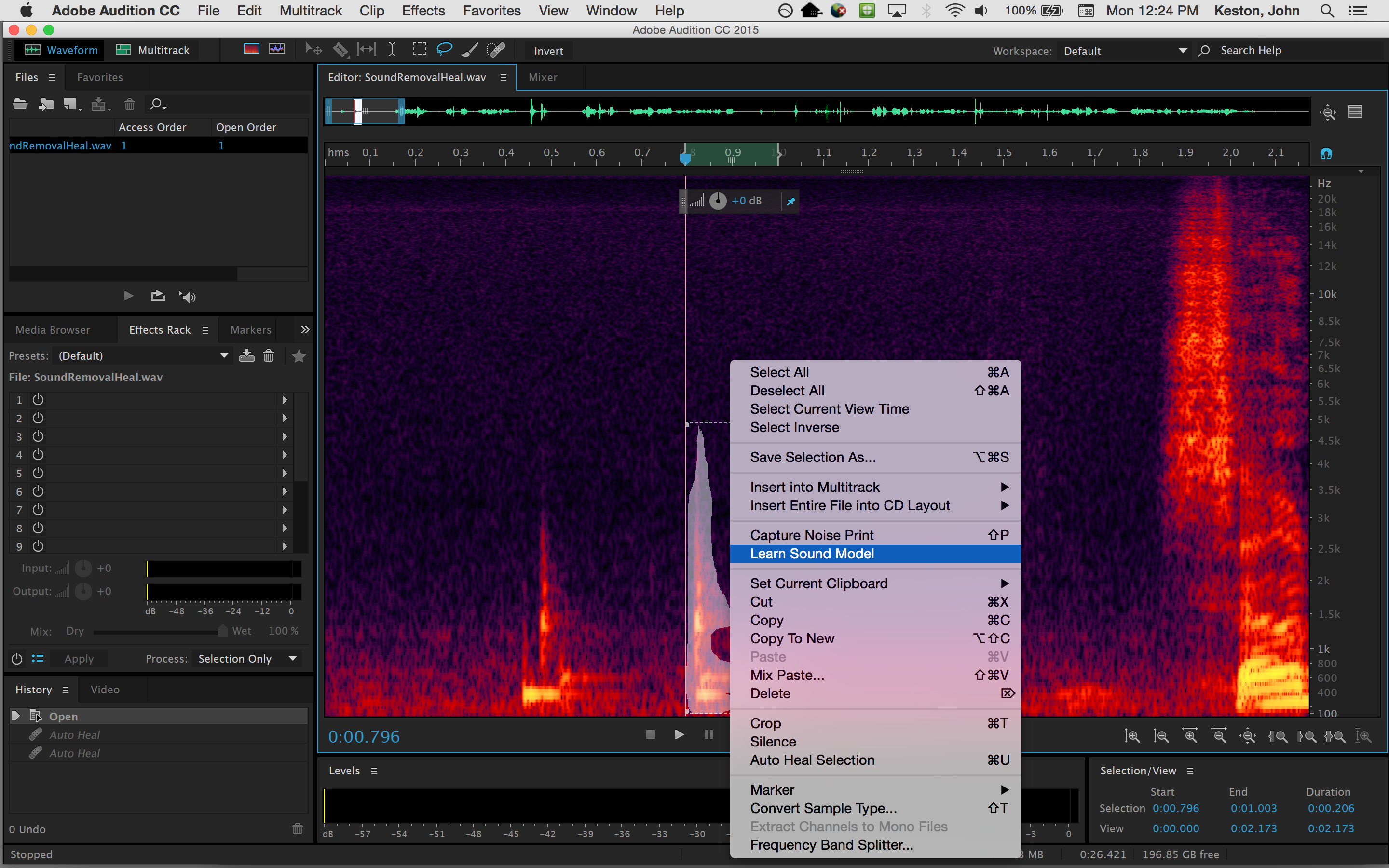
Session 2: This week we’ll start looking at ways to use Adobe Audition’s noise reduction techniques. One of my favorite sayings is, “garbage in garbage out”. In other words it is important to start out with the best possible quality in your recordings. If you can retake recordings that have excessive noise or intrusive ambient sounds then by all means retake those recordings under better conditions or circumstances. In some instances you may have a recording that is impossible to re-record. In these cases your sound might benefit from applying noise reduction. Audition is one of the best applications available for reducing noise without leaving behind artificial sounding artifacts. This week I will demonstrate a few of these techniques.
Download the Noise Reduction Demo Files
Also, today the Signal Processing Exercise is due. Please make sure that it is uploaded to Canvas before class starts so that we can listen to a few of your exercises in class today. A week from today the Field Recording Library project is due. During studio time today I will give you feedback on your sounds so far. Note: Please have a minimum of one incidental and one ambient example on hand for feedback.
Prior to today’s studio time I will wrap up demonstrations of several noise reduction techniques using Adobe Audition.