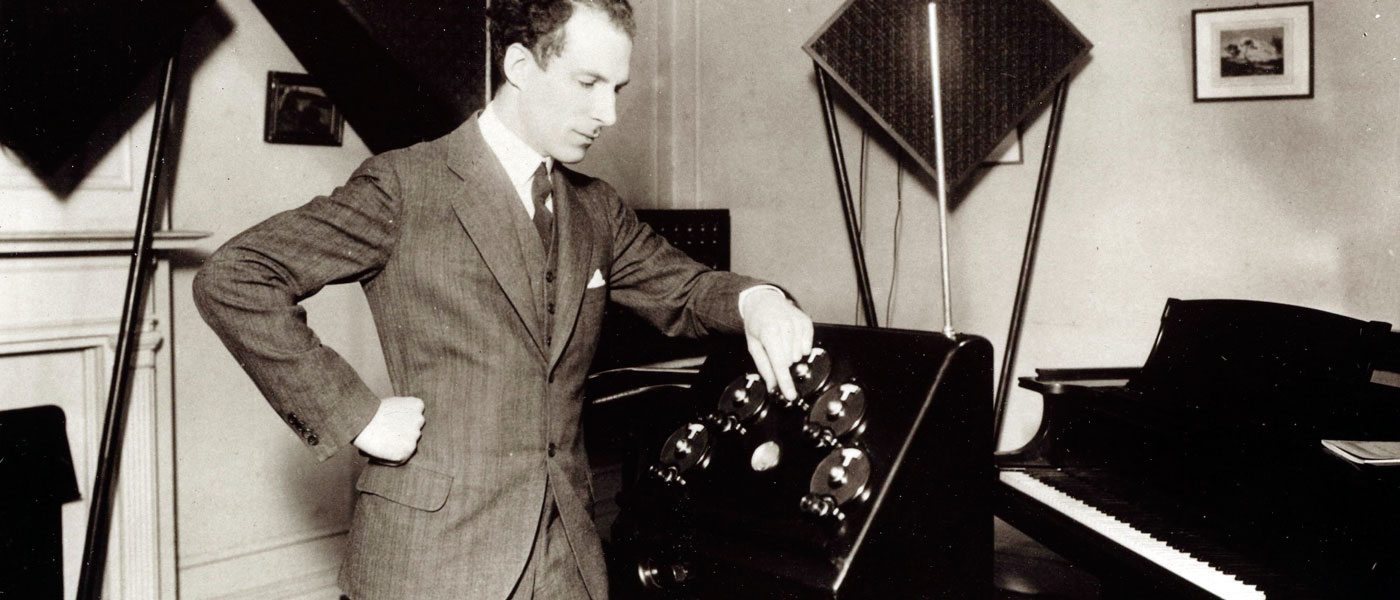
Session 1: Making a digital Theremin is akin to making a “hello world” script when it comes to programming sound. The Theremin is one of the only musical instruments that does not require the artist to touch it. Instead hand gestures near the device determines the pitch and amplitude of a synthesized waveform. We can easily replicate this process by using the mouse or trackpad axes to change the frequency and amplitude of a modeled waveform.
Lab 1: Let’s continue experimenting with sound synthesis techniques.
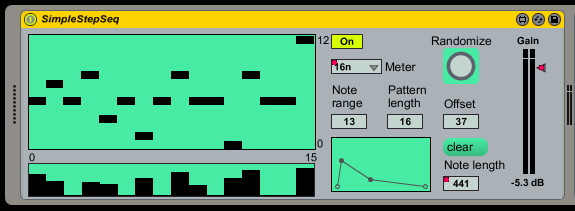
Session 2: A common and popular way to make music electronically is step sequencing. Step sequencers are an accurate and rigid way to program musical phrases. Composers simply click boxes to add notes to a sequence. The advantages of simplicity and ease of use make step sequencers a ubiquitous technique in electronic music. The disadvantage is that the mastery and expression possible with an instrument like the Theremin isn’t possible with simple step sequencers. A simple step sequencer usually has a predetermined set of pitches. These can be stored as frequency values in an array. Usually the frequencies are organized into a scale so that the sequences result in consonant instead of dissonant melodies.
Lab 1: In lab today we will look more at synthesizing and sequencing sound.